What BackyardHomesteads actually does — in five minutes.
If any of these is keeping you up at night, you are not overreacting.
The food system most of us grew up trusting has changed in ways that are not temporary. Here is what is actually happening — and why more families are quietly stepping outside of it.
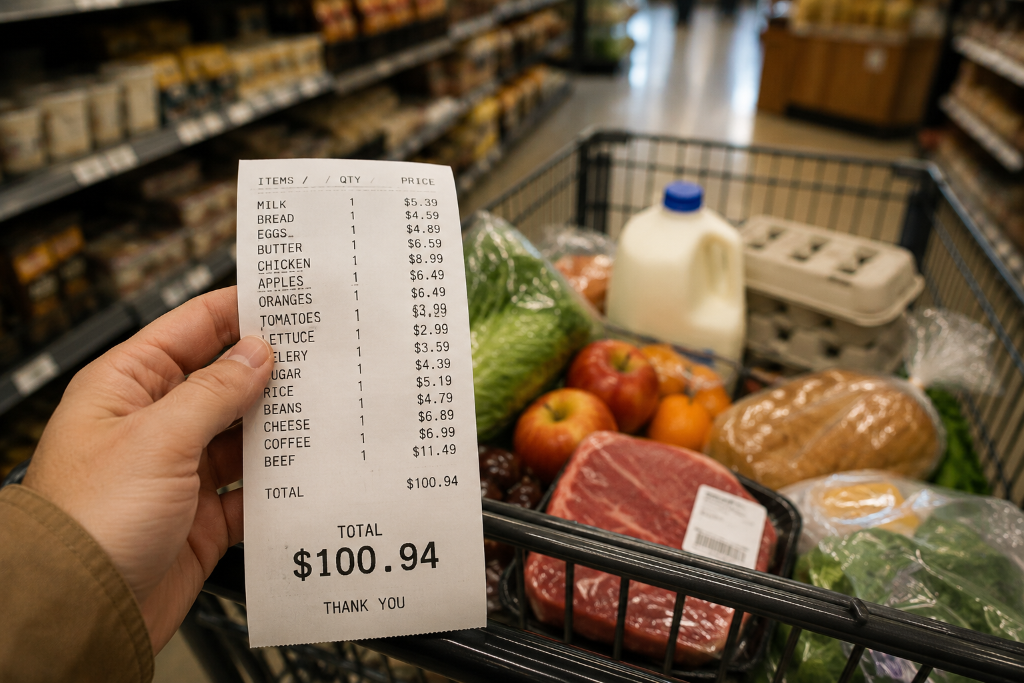
Your grocery bill is not going back down. It is not supposed to.
Food price inflation is not a temporary shock. It is the new structure of a food system dealing with energy costs, supply chain fragility, labour shortages, and weather events that are becoming routine rather than exceptional. The families adjusting to the new prices are the ones paying them indefinitely. The families who started producing their own food are the ones who stopped.
One thousand square feet of well-managed backyard food production — raised beds, vertical growing, a modest perennial planting — replaces $1,500 to $3,000 of annual grocery spending, calculated at standard retail prices. At farmers market prices for the quality of food a properly managed backyard system produces, the number is higher.
Every year you delay starting is another year paying full retail for food you could have grown. The prices you are paying today are the cheapest they will be for some time.
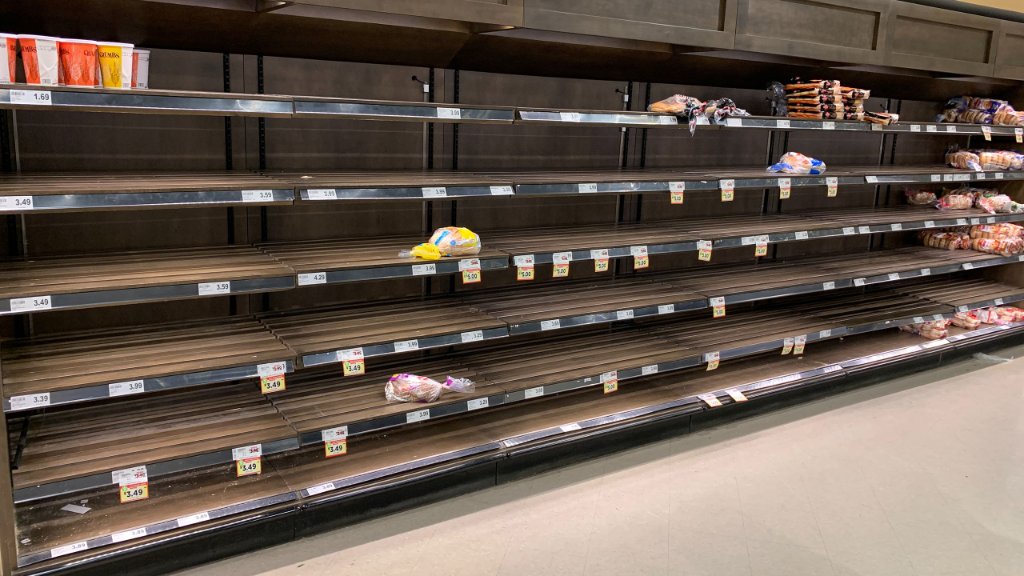
Empty shelves are no longer unthinkable. We have already seen them.
The images from March 2020 — bare pasta aisles, stripped paper goods shelves, meat counters with nothing behind the glass — were the first time most people alive today saw what a disrupted food supply chain looks like. It will not be the last.
The avian influenza outbreak that drove egg prices to historic highs destroyed the flocks of tens of millions of laying hens across North America in 2022 and again in 2024. Supply never fully recovered before the next wave arrived. That disruption came from one pathogen. One.
Extreme weather, port strikes, fuel price spikes, processing facility fires — every one of these has caused regional or national shortages in recent years. The food system is more concentrated, more lean, and more fragile than it has ever been. The average grocery store carries approximately three days of inventory. Three days.
A household with a productive garden and a stocked pantry of home-preserved food is not dependent on the supply chain holding together. It simply is not. That is a qualitatively different position from the household that is fully dependent on a system over which it has no control and about which it receives no warning.
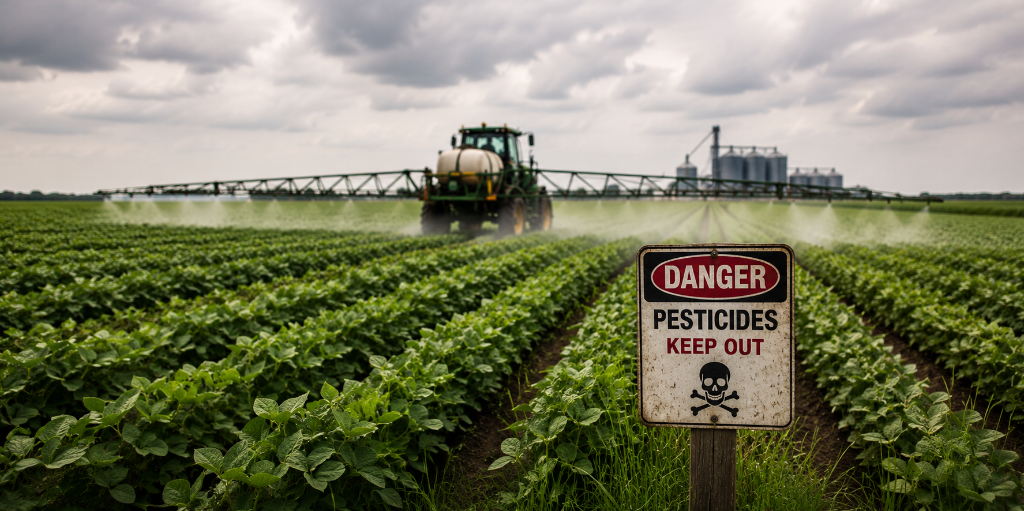
Do you actually know what is in the food your family is eating?
The United States has more food recalls in a typical year than most people realize. Lettuce contaminated with E. coli. Deli meat with listeria. Onions with salmonella. Ground beef with dangerous pathogens. These are not rare events — they are routine features of an industrialized food system that moves enormous volumes of food through shared processing infrastructure.
And that is before we get to what is considered acceptable and not recalled: the pesticide residues on conventionally grown produce that the Environmental Working Group has documented for decades in their annual Dirty Dozen report. The fact that more than 70% of conventionally grown produce in the United States tests positive for pesticide residues.
When you grow food in your own backyard — without synthetic pesticides, without herbicides, in soil you have built yourself — you know exactly what went into it. There is no label to parse. There is no recall to worry about. There is no supply chain between the soil and the plate.
Food you grew yourself is the only food on the planet whose provenance you know with complete certainty. Everything else is taken on trust.
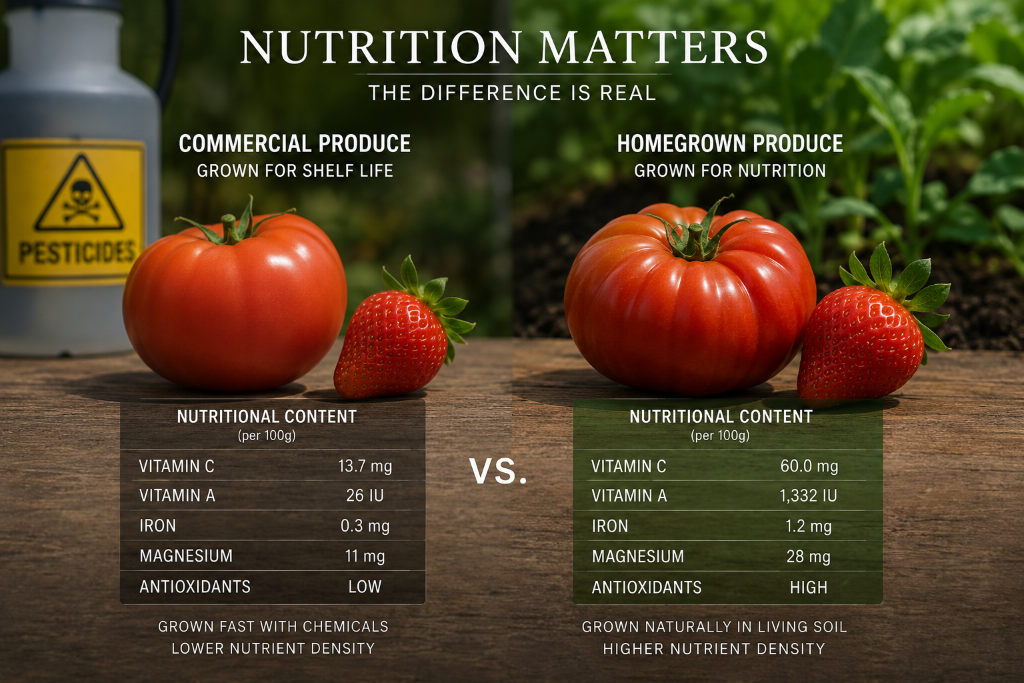
The food at the grocery store is not as nutritious as the food your grandparents ate. Not even close.
A landmark 2004 study comparing USDA nutritional data from 1950 to 1999 found significant declines in protein, calcium, phosphorus, iron, riboflavin, and vitamin C in 43 common vegetables and fruits — declines of 6% to 38% across nutrients. The likely cause: modern breeding programs that prioritize yield, size, and shelf life over nutritional density.
A tomato harvested at full ripeness from a backyard plant and eaten the same day contains more lycopene, more vitamin C, and more flavonoids than a tomato picked green, gassed with ethylene to turn red, and transported 1,500 miles over two weeks. These are not the same food. They look the same. They are not the same.
Research consistently shows that people who grow their own food eat more vegetables, eat more variety, eat food at peak nutritional density, and spend significantly more time outdoors with their hands in soil — an activity linked in multiple studies to reduced depression, reduced anxiety, and improved immune function.
Growing your own food is not just a financial decision. It is a health decision. The food your family eats from a well-managed backyard system is more nutritious, more fresh, more chemically clean, and more connected to the season and the soil than anything available at any price point in any grocery store.
What if your family's food supply didn't depend on any of that?
Not a fantasy. Not a farm in the country. Not a complete lifestyle change. A backyard — any backyard — managed as a productive food system, with a real plan, a real calendar, and a real preservation program that builds a pantry your family actually draws from.
Tens of thousands of suburban families are already doing this. The difference between the ones who succeed and the ones who plant a few tomatoes and give up is not motivation, not land, and not knowledge. It is a system.
This is that system.
See What Your Backyard
Could Actually Produce
Enter your location and goals. Get a real yield estimate for your space, and your personalized plan outline emailed to you — free.
BackyardHomesteads — The complete system for building a productive backyard food supply.
Not a general gardening guide. Not another book of tips. A complete, integrated system — a 40-section manual and a personalized planning app — designed to take any backyard in any climate from bare lawn to serious food production.
40 sections. Everything from soil biology and crop planning to canning, fermentation, animal systems, and seed saving. Written for the person who has never grown food seriously and wants to — without the fluff, without the filler, without the assumption that you already know.
Enter your postal code, your available space, your family size. Get a personalized crop plan, a week-by-week planting calendar specific to your climate's actual frost dates, yield projections in real pounds and dollar values, and a harvest tracker that makes next year's plan better than this one.
Planting calendar, harvest log, preservation schedule, and seasonal reference cards. Print once. Use all season. The physical planning companion that keeps the system running when you're away from a screen.
Real numbers from real backyard food systems.
The benefits that don't show up on the grocery receipt.
Food you trust completely. You know the soil it grew in, what went on it, when it was harvested, and who handled it between the ground and the plate. That certainty is not available at any price point in any store.
Nutritional density that store food cannot match. Homegrown produce harvested at full ripeness and eaten the same day contains significantly higher concentrations of vitamins, minerals, and antioxidants than produce picked before ripeness and transported across the continent.
No pesticides. No herbicides. No unknowns. You choose what goes on the soil. You choose what goes on the plants. The answer, for most backyard growers, is nothing synthetic — and the food reflects that choice.
Documented mental health benefits. Multiple peer-reviewed studies link regular gardening to reduced cortisol levels, reduced depression and anxiety symptoms, and improved mood — attributed to outdoor activity, physical engagement, and contact with soil microbiota.
Children who eat differently. Research consistently shows that children who participate in growing food eat significantly more vegetables, more variety, and are more willing to try unfamiliar foods than children who have no connection to where food comes from.
A pantry that is yours. A household that enters winter with shelves of home-preserved food, a root cellar stocked with storage vegetables, and a freezer full of its own produce has a qualitatively different relationship to the food system.
© 2026 BackyardHomesteads · Sign In